Let's be real about what actually changes
Your body doesn't stop wanting pleasure after 40. It just starts receiving it differently. The tissue thins slightly, blood flow patterns shift, and the nervous system's response time to standard vibration can feel less pronounced. But here's what nobody tells you: that shift isn't a dead end. It's a fork in the road toward sensation that's actually stronger, weirder, and sometimes more intense than what came before.
Lemon vibrators, specifically air-suction clitoral vibrators like the Lem, work with these changes instead of against them. The reason has everything to do with neurophysiology and almost nothing to do with the vibration speed you've been chasing.
How tissue changes reshape what feels good
Estrogen decline (which happens gradually in your 40s, sharply in your 50s, and then stabilizes) does real physical things. Clitoral tissue thins, the outer labia loses some fullness, and the vaginal opening becomes less elastic. Capillaries that fed blood flow into the clitoris during arousal become slightly less responsive to the standard stimulation pattern.
That sounds like bad news. It's actually the setup for better news.
Traditional vibrators rely on rapid oscillation transferring energy directly into tissue. When tissue is thick and highly vascularized, this works beautifully. When tissue is thinner, direct vibration can feel sharp, overwhelming, or even numb. Your nervous system is being hammered, but the signal isn't translating into pleasure the way it used to.
Air-suction toys work on an entirely different principle. Instead of vibrating against tissue, they create gentle cycles of suction and release. This stimulates the entire clitoral complex (the internal structures that extend deep into the body) rather than just the visible head. The sensation is broader, deeper, and it recruits more nerve pathways.
The result: stronger orgasms with less intensity on the surface. It's the difference between knocking on a door and opening it from the inside.
Why your nervous system loves the suction method
Your clitoris isn't just a button. It's a complex network of over 8,000 nerve endings, and most of them live deeper than the surface tissue. The visible part of the clitoris is only about 25% of the full structure. The rest is internal, branching like a wishbone through your pelvic floor.
Traditional vibrators reach maybe 40% of that neural real estate. Suction reaches closer to 80%. That's why so many people report that lemon vibrators feel like they're hitting nerves and pathways that previous toys never touched.
After 40, this matters more. Thinner tissue means direct vibration can overstimulate surface nerves while underlayers go silent. Suction distributes the signal more evenly across the whole clitoral system. You feel more total sensation with less surface irritation. It's why people often say that air-suction toys "feel deeper" but "gentler" at the same time. Both are true.

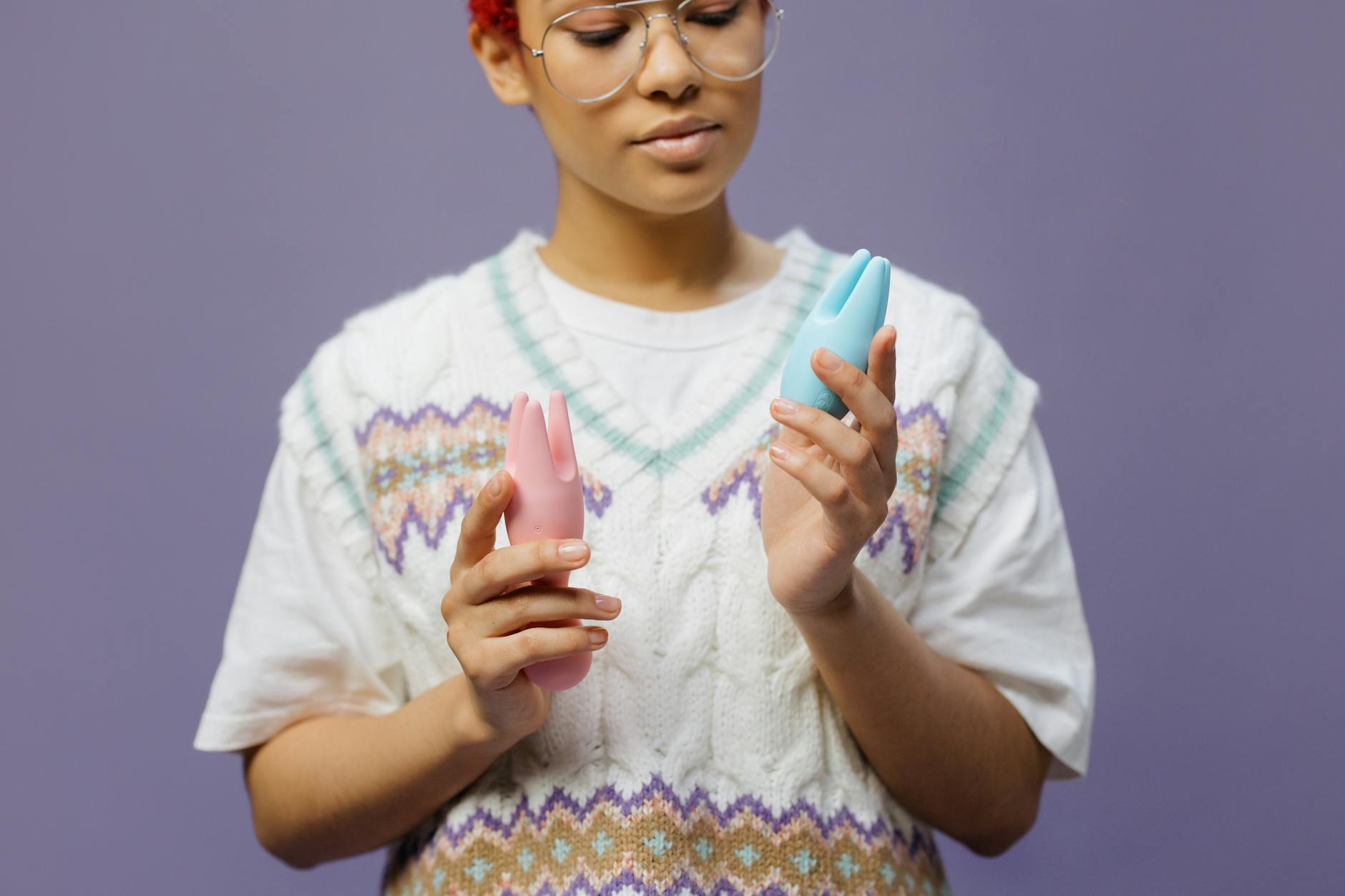
Photo by Hanna Brovko on Pexels
The orgasm intensity piece (and why it's not what you think)
Intensity isn't about how hard your toy vibrates. It's about how many nerve pathways light up at the same time, how long they stay activated, and whether your brain has permission to focus on the sensation without distraction.
Lemon vibrators excel at all three, especially for bodies that have spent decades getting familiar with their own responses. You know what you like. Your nervous system knows what it's looking for. A lemon clitoral vibrator removes the friction. Suction patterns build gradually rather than shocking the system. Recovery between pulses is softer, so the arousal doesn't flatline if you miss the exact pressure sweet spot.
Many people report their most intense orgasms come after switching to air-suction toys in their 40s and 50s. This isn't placebo. It's the difference between a toy designed for one physiological reality and a body living in a different one. Mismatch creates frustration. Alignment creates that chain reaction in your brain and body that people describe as "whole-body" pleasure.
How to time this tool into your actual arousal cycle
One shift that happens after 40 is arousal ramp time. You might need 10-15 minutes of warm-up instead of 5. Your body isn't broken. The neural cascade that builds arousal is the same, it just takes longer to gather momentum.
Here's where lemon vibrators shine. They're not impatient. You can start on the gentlest suction pattern and let it build naturally without that jarring on-off intensity that traditional vibrators force you through. Your arousal can find its own rhythm. The toy meets you there instead of demanding you catch up to the toy.
Start 10-15 minutes into foreplay or self-pleasure, not at the beginning. Let arousal build organically. Use the lower suction settings first. Many people find they want to increase intensity only in the final 2-3 minutes before orgasm. This is different from how you might have used vibrators before, and it matters. Your nervous system isn't broken. The timing just shifted.
The role of mental permission and distraction
I can't talk about orgasm intensity after 40 without talking about the psychological piece, because it's equally important.
When you're in your 20s and 30s, orgasm can often happen despite distraction. Racing thoughts, partner timing concerns, body image. The neurochemical surge is strong enough to push through noise.
After 40, the margin for error shrinks. Your brain has to actually be present. If you're thinking about your stomach or worried about noise or performing the experience rather than having it, the intensity tanks. Clitoral vibrators don't fix that. But air-suction toys do something interesting. Because they feel so different, so novel, many people find it easier to drop the performance script and just experience what's actually happening.
Their mind gets quieter faster. That's not chemistry. That's just how novelty works on the nervous system.
When sensation changes mean it's time to explore
If you've been using the same vibrator for 10 years and it stopped working the way it used to, that's not a sign your body is failing. It's a sign your body has adapted. Your nervous system is incredibly good at habituating to stimulus. The toy becomes background noise.
Lemon vibrators reset that. The suction pattern is different enough that your nervous system can't tune it out. Many people find they get 2-3 years of consistent sensation from an air-suction toy before habituation sets in again. That's longer than most traditional vibrators.
If you're with a partner and your orgasm patterns have shifted, this matters. Sometimes the issue isn't desire or emotional connection. Sometimes it's just that the tool doesn't match the body anymore. Switching to a lemon clitoral vibrator can feel like stepping out of a dark room into light. It's not about the toy being "better." It's about alignment.
The nerve recovery piece
Here's something most sources gloss over: direct vibration can temporarily reduce nerve sensitivity if used intensely for long periods. This is temporary, but it's real. You use a high-power vibrator, get numb, take a break, regain sensitivity. Then you're back where you started.
Suction-based toys create a different pattern. Because the stimulation is broader and less peaked, there's less localized nerve fatigue. Many people find they can use a lemon vibrator for longer sessions without that post-pleasure numbness that shuts down sensation for hours. You get pleasure, then baseline feeling returns faster.
This also matters if you're using a toy multiple times a week. Sustainable pleasure matters more after 40 than it did at 25.
FAQ: Questions people actually ask
Does a lemon vibrator work if I haven't been able to orgasm with other toys?
Often, yes. If traditional vibrators have felt too buzzy, sharp, or numbing, air-suction toys approach the nervous system completely differently. The suction pattern can reach nerve pathways that direct vibration misses. That said, if you haven't been able to orgasm with any toy, the issue might be psychological, hormonal, or related to medication. A conversation with a healthcare provider who specializes in sexual health is worth having before assuming it's the toy.
Can I use a lemon vibrator if my tissue is sensitive or thinned from hormonal changes?
Absolutely. In fact, this is where air-suction toys excel. Because they don't rely on direct vibration against thin tissue, many people with genitourinary syndrome of menopause (GSM) find them far more comfortable than traditional vibrators. Start on the lowest suction setting and let your body adjust. Most people find they can work up to higher intensities over a few sessions as the nervous system wakes back up.
How is a lemon clitoral vibrator different from other air-suction toys?
The Lem is specifically designed for clitoral stimulation with a smaller opening that creates more focused suction. Other air-suction toys on the market vary in opening size, suction strength, and pattern options. Lemon vibrators from Hello Nancy are built with consistent suction patterns and a shape that works with different body geometries. The specificity matters when you're dealing with tissue changes.
Will my body adapt to a lemon vibrator the way it adapted to my old toy?
Eventually, maybe. But it usually takes longer than it would with a traditional vibrator because the stimulus is novel. When habituation does happen, it's often less complete because suction engages more of the clitoral system than vibration alone. If you do adapt, cycling between air-suction and other toy types, or taking 1-2 week breaks, resets sensitivity quickly.
Is there a right time in my cycle to use a lemon vibrator after 40?
After natural menopause, cycle timing doesn't apply. Before menopause, during the luteal phase (second half of your cycle), many people find they need more intense stimulation and benefit from air-suction toys because they can deliver that intensity without surface irritation. During the follicular phase, lower settings often feel more pleasurable. Pay attention to what your body tells you across your cycle.
If I have a partner, does using a lemon vibrator change how we have sex together?
Not necessarily, but it can. Some couples use clitoral vibrators during partnered sex for additional pleasure. Others use them solo and find that increased sexual confidence carries into partnered encounters. Some find that vibrator use deepens communication about what feels good, which improves the overall sexual relationship. The toy isn't a replacement. It's a tool that can enhance knowing your own body, which benefits every kind of sex you have.
The bottom line
Your body after 40 isn't a downgrade. It's a different instrument. Most toys are built for the instrument you had at 25. Lemon vibrators are built for the nervous system you have now. That's not poetic. That's engineering. And it changes everything about what becomes possible.
If traditional vibrators have stopped working the way they once did, that's not a sign to give up. It's a sign to try something built for this chapter. The orgasms people report after switching to air-suction toys aren't louder or faster. They're deeper. More whole-body. More surprising. And for most people, that's a significant upgrade.
You deserve pleasure that fits your actual body, not the body you used to have. A lemon vibrator is one way to find it. Want to explore what's right for you? Reach out to our team for personalized recommendations based on your preferences.
References & Sources
Anderson, B. L., et al. "Sexual self-schema and sexual morbidity among gynecologic cancer survivors." Journal of Consulting and Clinical Psychology, 2007.
Berman, J. R., et al. "Female sexual dysfunction: Anatomy, physiology, evaluation and treatment options." Oncology, 2003.
DeLamater, J. D., & Sill, M. "Sexual desire in later life." Journal of Sex & Marital Therapy, 2005.
Freeman, E. W. "Sexual function in aging women: Hormonal causes and pharmacological treatment." American Journal of Obstetrics and Gynecology, 2005.
Lindau, S. T., et al. "A study of sexuality and health among older adults in the United States." New England Journal of Medicine, 2007.