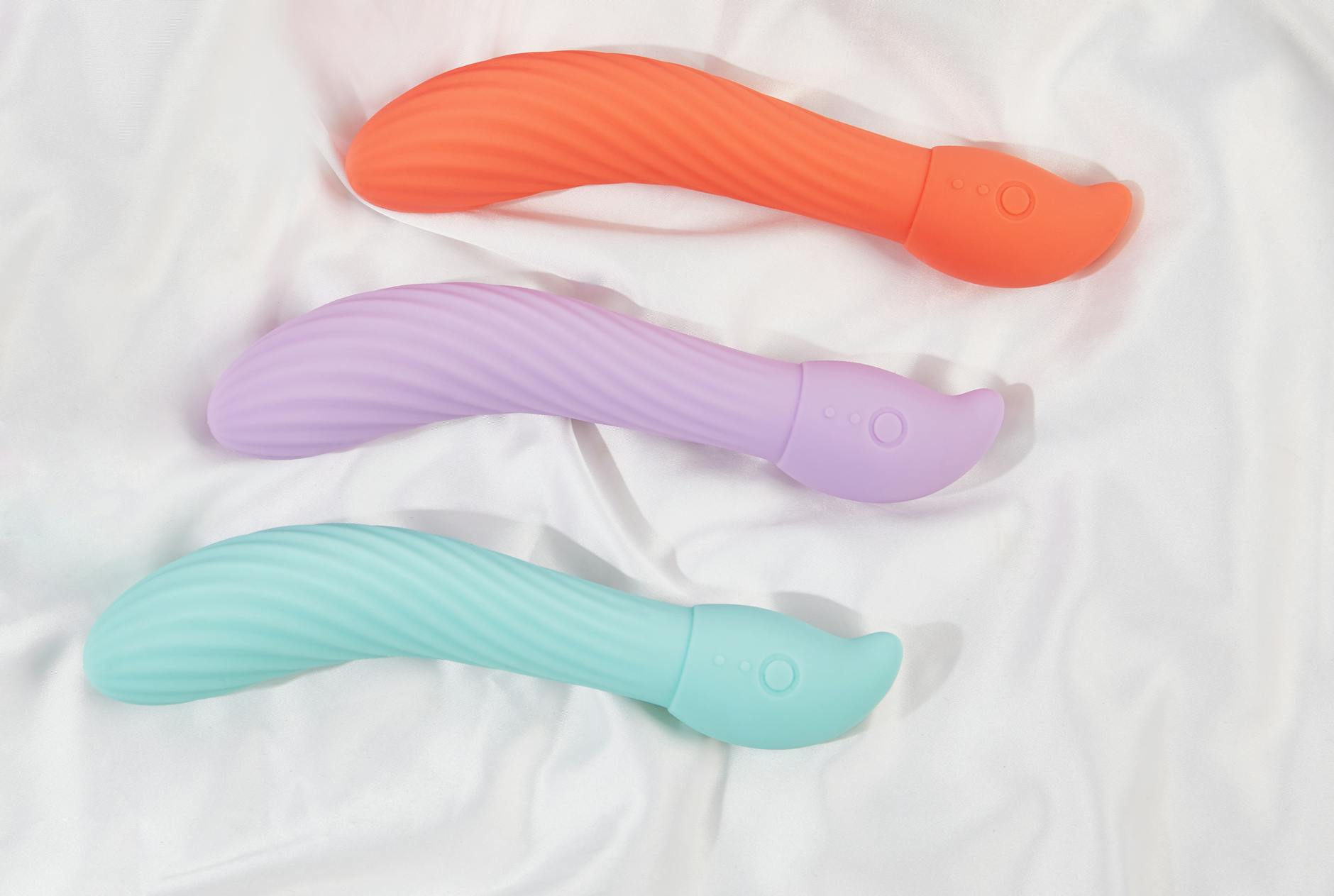
The fundamental difference nobody explains
Here's the thing. A traditional vibrator buzzes. A lemon vibrator, like Hello Nancy's clitoral vibrator, creates gentle suction. Those are not the same experience, and if you've tried one kind and hated it, that doesn't mean the other won't work.
I've worked with plenty of people who assumed they didn't like toys at all, only to discover they'd never tried the right mechanism. Understanding this distinction changes everything.
Vibration: how traditional clitoral toys work
Traditional vibrators move back and forth very quickly. Most oscillate between 5,000 and 10,000 times per second. That rapid movement stimulates nerve endings through friction and pressure. It's direct, it's intense, and it works beautifully for a lot of people.
Here's what vibration does well. It creates immediate sensation. It's predictable. You know roughly what you're getting. The intensity is easy to control with a simple dial. And for people whose nerve sensitivity is standard or lower, vibration reaches the threshold needed for arousal quickly.
But vibration has a ceiling. The more pressure you apply, the more intense it becomes. There's no subtlety between "barely on" and "too much." For people with sensitive tissue, people recovering from childbirth, or anyone whose nervous system prefers gentleness, traditional vibrators can feel overwhelming or even uncomfortable. Some people describe it as buzzing right past the sweet spot.
Suction: how lemon vibrators work differently
Suction is almost the opposite. Instead of moving back and forth, a lemon clitoral vibrator uses rhythmic pulsing to create a gentle, sustained pulling sensation. Think of it less like a jackhammer and more like a soft mouth.
This mechanism matters because it engages different nerve pathways. Suction stimulates more area at once. It creates deeper sensation without requiring direct pressure. And crucially, you can enjoy it for longer without fatigue or numbness setting in. The sensation distributes differently across the clitoral body, which for many people feels more whole.
Lemon sexual toys like the Lem also sit differently anatomically. Traditional vibrators often need to be held at a specific angle against a small point. Suction toys cup the area, which means you have more range of motion and less pressure requirement. This is why people with vulvas of different sizes and shapes often report that lemon vibrators feel more intuitively comfortable.
Why one works when the other doesn't
I've had clients tell me, "I've never been able to come with a vibrator." Then they try a suction toy and orgasm within minutes. I've also heard the reverse. Neither story means anyone's broken. It means their nervous system prefers one type of stimulation.
For sensitive tissue, lemon vibrators are often gentler. You're not pressing and releasing rapidly. You're creating gentle pressure and release. For people with nerve damage, chronic pain, or high sensitivity, that distinction is everything. A traditional vibrator might feel like static on the nerve. A lemon clitoral vibrator might feel like music.
For people with lower sensation or who need more intensity, a strong traditional vibrator might be the better call. But here's the part most people don't know: even then, lemon vibrators can surprise you. The sensation is different enough that what didn't work with one mechanism can absolutely work with another.
The comfort factor
One underrated advantage of lemon adult toys is what I call the "fatigue ceiling." Because suction doesn't rely on direct friction, you can use it longer without that numb, overstimulated feeling that sometimes comes with vibration. Your nerve endings don't get as worn down.
Partners also tend to have an easier time with suction toys. If you're using a toy with a partner, the sensation is less "buzzing against you" and more integrated into the whole experience. Many people find they can use a lem vibrator during penetration more easily because it doesn't create as much vibration interference.
If you're using a lemon vibrator with a partner during foreplay, the control and ease of suction often feels less clinical and more playful.
Cost, durability, and maintenance
Let's be practical. Traditional vibrators are often cheaper to start. You can find them at lower price points. But lemon vibrators tend to hold up better over time. Suction mechanisms are less mechanically complex than the motor-and-brush setup of most vibrators.
Maintenance is simpler with suction toys. There are fewer moving parts. They're quieter, which matters if you live with other people. And because they don't require the same pressure, the materials don't degrade as quickly from repeated contact.
What the research actually says
Studies comparing pleasure outcomes between vibration and suction are limited, but the data that exists is interesting. A 2023 review found that suction-based devices showed higher satisfaction rates among people who had previously struggled with traditional vibrator orgasm. The mechanism seemed to matter more than brand or price.
One smaller study with post-menopausal people found suction devices significantly more comfortable than traditional vibrators on sensitive tissue. But these aren't massive studies. The honest answer is that individual variation is huge.
How to know which to try first
If you have sensitive tissue, have experienced numbness with other toys, or prefer gentleness, start with lemon vibrators. If you've never used toys before and you're nervous, lemon vibrators often feel less intimidating because the sensation is more intuitive.
If you want intensity and immediate sensation, traditional vibrators might call to you first. But don't rule out lemon sexual toys just because the first thing you tried didn't work. Different mechanism doesn't mean worse. It means different.
The real question
Here's what I want you to hear: your body is not wrong if vibration doesn't work for you. Traditional clitoral vibrators are not the gold standard for every body. Lemon clitoral vibrators exist specifically because the science of pleasure is individual.
Trying one, then the other, isn't indecisive. It's smart. Your pleasure deserves investigation. Whether you reach for a traditional toy or a lemon vibrator, the point is that you're paying attention to what actually works for you, not what you think should work.
Frequently asked questions
Is suction or vibration more likely to cause orgasm?
Neither is inherently superior. Research shows that individual nerve sensitivity, tissue type, and mental state matter far more than the mechanism itself. Some people reach orgasm faster with suction. Others need vibration. Many people use both at different times depending on mood, energy level, and what their body needs that day. The best toy is the one that feels good to you, not the one with better press.
Can you use a lemon vibrator with a partner more easily than a traditional vibrator?
Yes, usually. Suction toys create less vibration interference and feel more integrated into partnered activity. They're also quieter and less likely to create that "buzzing" sensation that some people find distracting during sex. But comfort always depends on communication and what both partners want.
Why do lemon vibrators feel gentler on sensitive tissue?
Because suction distributes stimulation across a wider area without requiring direct pressure. Traditional vibrators create localized, intense friction. For people with thin tissue, nerve damage, or chronic pain, distributed sensation over friction-based sensation often feels more comfortable. It's the difference between a targeted punch and a sustained embrace.
Do lemon clitoral vibrators work if you've never had an orgasm before?
They do for many people. The gentler, more intuitive sensation helps some people relax enough to explore their own response. That said, first orgasm is about much more than the toy. It's about mental state, freedom from pressure, and self-knowledge. If a lemon vibrator doesn't work, that's information, not failure.
Can you switch between a traditional vibrator and lemon sexual toys, or will your body get "addicted" to one?
You can absolutely switch. Your body won't get addicted to a mechanism. That said, some people find that once they discover what actually works for them, they prefer it and use it more. That's preference, not dependency. Variety is good, and most people benefit from having options.
Are lemon vibrators worth the investment if traditional vibrators are cheaper?
If traditional vibrators have never worked for you or caused numbness, yes, absolutely. The price difference is usually not huge, and a toy that actually feels good is worth more than a cheaper toy that sits in a drawer. But if traditional vibrators work well for you, there's no pressure to switch just for novelty.
Your pleasure is not a one-size-fits-all thing. Lemon vibrators exist because some bodies need them. Traditional vibrators exist because some bodies love them. You might love both. You might prefer one and never touch the other. What matters is that you know what you're choosing and why. That's the only real expertise you need.